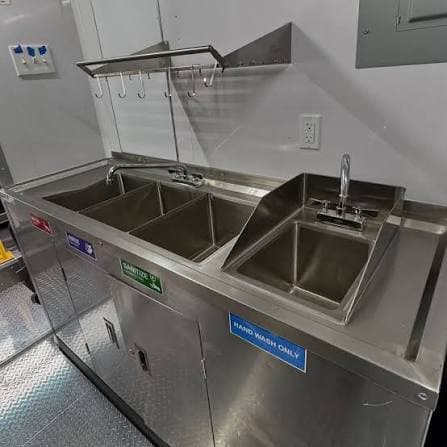
A proper food truck sink installation is one of the most important requirements when building a commercial mobile kitchen. Every health department requires food trucks to include a correctly installed three-compartment sink for washing, rinsing, and sanitizing utensils. Without it, obtaining food truck permits and licenses can become difficult or even impossible.
Whether you're planning to buy a food truck new, searching for food trailers and trucks, or working with experienced food truck builders, understanding sink installation requirements will save you time, money, and costly inspection failures.
Why Every Food Truck Needs a Three-Compartment Sink
A three-compartment sink is designed to keep cooking equipment clean and prevent cross-contamination.
Each compartment has a specific purpose:
- Wash
- Rinse
- Sanitize
Unlike residential sinks, commercial food truck sinks must meet local and state health department regulations. Professional food truck builders near me always design sink systems according to health codes before construction begins.
Whether you're building a food trailer, custom food trailers, or a fully equipped new food truck, the sink layout should be included in the initial food truck design.
Health Department Requirements
Although regulations vary by state, most health departments require:
- Three separate sink compartments
- NSF-certified stainless steel sink
- Hot and cold running water
- Fresh water tank
- Wastewater (gray water) tank
- Commercial faucet
- Proper plumbing connections
- Approved water heater
- Handwashing sink installed separatelyThree
Meeting these requirements is essential before applying for food truck permits and licenses.
Professional food truck manufacturers near me understand local inspection requirements and can help avoid expensive modifications later.
Choosing the Right Sink Size
The sink should be large enough to completely immerse your biggest cooking utensil.
Common sink sizes include:
- 10" × 14"
- 12" × 16"
- 14" × 16"
The correct size depends on your menu and equipment.
For example:
- BBQ trucks need larger sinks.
- Coffee trailers often use smaller sinks.
- Taco trucks typically require medium-sized compartments.
Experienced food truck builders customize sink sizes based on kitchen workflow rather than installing one standard option.
Water System Requirements
A commercial sink system requires more than just the sink itself.
Your water system should include:
- Fresh water tank
- Gray water tank
- Water pump
- Water heater
- Drain lines
- Ventilation
- Pressure regulator
- Shut-off valves
Proper plumbing ensures safe operation and helps pass inspections.
Many businesses investing in food truck equipment underestimate the importance of a professionally designed plumbing system.
Stainless Steel Matters
Commercial-grade stainless steel is the industry standard because it is:
- Rust resistant
- Easy to sanitize
- Long lasting
- Health department approved
- Durable under heavy use
Leading food truck manufacturing companies only use NSF-certified stainless steel for commercial kitchens.
Whether you're buying food trucks and trailers for sale or ordering customized food trucks, verify the sink material before purchase.
Proper Sink Placement
A poorly placed sink slows down kitchen operations.
The ideal location should provide:
- Easy access for employees
- Efficient workflow
- Safe food preparation
- Comfortable cleaning space
- Quick drainage
Professional food truck design focuses on maximizing every inch inside a compact kitchen.
The sink should never interfere with cooking stations, refrigeration, or customer service windows.
Fresh Water vs. Waste Water Tanks
Every commercial truck requires two separate tanks.
Fresh Water Tank
Stores clean potable water used for:
- Hand washing
- Dish washing
- Cooking preparation
Gray Water Tank
Collects wastewater from:
- Three-compartment sink
- Hand sink
- Equipment cleaning
Most health departments require the gray water tank to be larger than the fresh water tank.
Professional food truck builders near me always size these tanks according to local regulations.