Introduction
If you've started researching food truck builds, you've probably seen “NSF certified” listed as a spec on stainless steel surfaces, sinks, refrigeration units, and equipment. But what does NSF certification actually mean, why does your health department require it, and what happens if something in your truck is not NSF certified? At ESC, NSF compliance is built into every single build we produce. Here is what you need to know.
What Is NSF International and What Does NSF Certification Mean?
NSF International is an independent public health organization that tests and certifies food service equipment to ensure it meets sanitation, safety, and durability standards. In the
food truck business, NSF certified food truck equipment is critical because health inspectors verify that every surface and appliance touching food can be cleaned properly and safely.
When you make a food truck or invest in
custom food trailers, certification matters because uncertified equipment can fail inspection immediately. Whether you operate concession trailer units, food vans, food carts, or large food trailers and trucks, NSF compliance protects both your business and your customers.
Most health departments across the United States require NSF certified equipment for:
Refrigeration systems
Food prep tables
Stainless steel counters
Food truck sink systems
Freezer food truck equipment
Ice makers
Food truck water system components
Commercial exhaust hood installation systems
If you are purchasing a food truck, buying a new food truck for sale new, or searching where to buy a food truck, NSF compliance should always be part of your checklist.
Which Food Truck Components Require NSF Certification (Full List)
Many first-time operators assume only cooking equipment needs certification. In reality, almost every major interior component inside food trucks and trailers must meet NSF standards.
Common NSF Certified Components Include:
Stainless steel prep tables
Refrigerators and food truck freezers
Commercial refrigeration installation near me systems
Food truck sink assemblies
Three-compartment sinks
Handwash sinks
Handwash sinks
Fire suppression system food truck equipment
Food truck ventilation fan systems
Commercial hood installation near me setups
Commercial exhaust hood installation systems
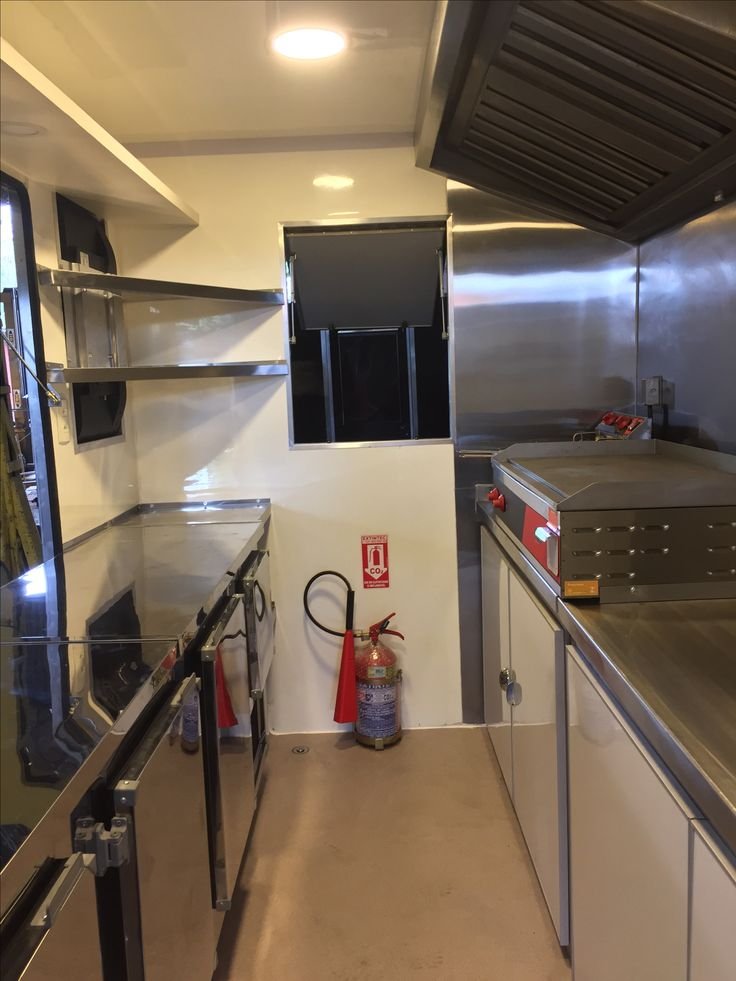
Food truck interiors and prep surfaces
Water pumps and plumbing fixtures
Storage shelving
Ice bins and beverage stations
Whether you run taco trucks near me searches, burger trucks for sale, lunch trucks for sale, barbeque food truck operations, or coffee food truck near me concepts, inspectors expect compliant equipment everywhere food is handled.
Professional food truck builders near me and food truck manufacturing companies understand that NSF compliance is not optional. It is one of the core foundations of food truck design and food truck interior layout planning.
Why Health Departments Check NSF Status at Inspection
Health inspectors are trained to identify contamination risks quickly. Non-certified materials can trap grease, bacteria, moisture, and food particles. That creates sanitation hazards that can shut down your operation before opening day.
When inspectors review food trailers, food trailer truck for sale units, or food service truck for sale vehicles, they commonly check:
NSF labels on refrigerators
Sink dimensions and drainboards
Stainless steel gauge thickness
Proper food truck water system installation
Hood systems and fire suppression
Sealed wall joints and flooring
Commercial kitchen hood cleaner accessibility
Refrigeration performance
Even if you buy a used food truck or used food service truck for sale, you still must meet current local health codes. Many owners searching where to buy a used food truck discover expensive violations only after inspection.
This is why experienced food truck builder teams build for inspection approval from day one.
The 3 Most Common NSF Violations ESC Sees on Used Trucks
1. Residential Equipment Installed Instead of Commercial Units
One of the biggest mistakes on used trucks is residential refrigerators or freezers. These fail because they are not designed for commercial food service environments.
Cheap refrigeration truck systems may save money initially but often fail inspection and increase future commercial kitchen equipment repair costs.
2. Improper Sink Installations
Many food truck sink systems fail because:
The handwash sink is too small
Water heaters are undersized
Plumbing lines are exposed
Drain systems leak
These violations commonly appear in low-budget food truck trailers for sale and small food trailers for sale listings.
3. Incorrect Stainless Steel Materials
Some builders use low-grade metal or improper finishes. Inspectors may reject:
Rust-prone surfaces
Exposed screws
Non-sealed corners
Thin gauge steel
Experienced custom food truck builders avoid these shortcuts entirely.
Stainless Steel NSF Requirements — What Grade, What Gauge
NSF standards usually require food-contact areas to use durable stainless steel that resists corrosion and cleans easily.
Most commercial food truck equipment uses:
304 stainless steel
18-gauge or heavier construction
Welded seams
Rounded corners
Professional food truck manufacturers near me understand that stainless quality directly affects inspection success and long-term durability.
This matters especially for:
Food truck interiors
Food truck equipment installations
Food truck generators
Prep counters
Refrigeration zones
Point three
Low-quality materials eventually lead to food truck repairs, commercial trailer repair near me visits, and expensive maintenance trailer service work.
NSF Sink Requirements — Three-Compartment and Handwash
Nearly every food truck business requires two separate sink systems:
Three-Compartment Sink
Used for washing, rinsing, and sanitizing dishes.
Handwash Sink
Dedicated only for employee handwashing.
Inspectors verify:
Proper sink sizing
Hot water temperature
Splash protection
Drain connections
NSF labeling
Point three
Poor sink design is one reason many operators search food truck repair near me or mobile truck repair services shortly after launching.
At ESC, every food truck sink installation is designed specifically around local code requirements.
Refrigeration NSF Requirements — What Brands Pass and Which Fail
Commercial refrigeration is one of the most inspected systems in any food trailer or concession trailer build.
Approved systems typically feature:
NSF certification labels
Commercial compressors
Proper temperature recovery
Stainless interiors
Easy-clean surfaces
Non-certified refrigerators often fail because they cannot maintain safe food temperatures during heavy service periods.
This is especially important for:
Food truck breakfast concepts
Ice cream truck businesses
Taco food truck near me operators
Food van catering services
Food truck catering wedding events
Reliable refrigeration also reduces emergency food truck repairs and commercial kitchen equipment repairs later.
How ESC Ensures 100% NSF Compliance on Every Build
At ESC, compliance is built into the process from the beginning — not added later.
Every new food truck, concession trailer sales project, and custom food trailers build includes:
NSF certified food truck equipment
Commercial-grade refrigeration
Approved hood and fire suppression systems
Proper food truck ventilation fan installation
Health-code-compliant plumbing
Full documentation package
Our team also handles:
Food truck fire suppression system installation
Commercial refrigeration installation near me requests
Mobile truck and trailer repair
Professional truck & trailer repair
Mobile truck mechanics near me support
Commercial kitchen equipment repair services
Whether you need a food truck for lease, lease food truck options, or a completely customized food truck build, NSF compliance remains essential.
FAQ — NSF Certification Questions from Food Truck Operators
Do all food trucks need NSF certified equipment?
Yes. Nearly every health department requires NSF compliant food truck equipment for commercial operations.
Can I use residential appliances?
Usually no. Residential appliances commonly fail inspection.
Does NSF certification apply to used trucks?
Absolutely. Even food truck used for sale units must meet current health standards.
Is fire suppression part of NSF compliance?
While separate from NSF itself, food truck fire suppression system installation is required by most fire codes and inspections.
Why is NSF important for food truck permits and licenses?
Without compliant equipment, many cities will deny permits or fail your inspection.
Does ESC provide inspection-ready documentation?
Yes. Every ESC build includes compliance documentation for health department review.
Final Thoughts
Whether you operate food trucks and trailers, launch a food van business, invest in concession trailer projects, or search for the best truck for a food truck, NSF compliance is one of the most important parts of the build process.
Cheap equipment creates long-term problems, inspection failures, and ongoing food truck repair near me costs. Working with experienced food truck builders ensures your truck is safe, compliant, and ready for service from day one.
Every ESC build is 100% NSF compliant from day one — documentation included. 350+ builds, 100% health code pass rate. Call (571) 651-0337