Starting a Food Truck Business in Virginia in 2026? Read This First
Most first-time food truck entrepreneurs in Virginia make the same mistake. They spend weeks searching for the right truck, comparing prices, and browsing builds online — before they have answered the one question that determines everything else: are you actually set up to launch correctly?
Virginia has specific health codes, fire safety requirements, county permit layers, and commissary rules that catch new operators off guard every single year. The result is delays, failed inspections, and money lost before the first customer ever orders.
At Elite Steel Concepts, we have built custom food trucks and concession trailers for Virginia entrepreneurs since 2012. We are based in Manassas, VA — right in the heart of the DMV market — and every truck we build is designed to pass Virginia health and fire inspection from day one. Our pass rate across 350+ builds is 100%.
This guide gives you the real roadmap. No fluff. No generic advice. Just the exact steps to launch a
food truck business in Virginia in 2026 — from concept to street-ready.
---
Step 1: Lock In Your Concept Before You Look at a Single Truck
This is where most people get it backwards. They find a truck they like, fall in love with it, and try to build a business around the vehicle. That is the wrong order entirely.
Your concept determines your build. Your menu determines your equipment. Your equipment determines your truck size, exhaust hood dimensions, electrical load, generator requirements, and whether a food truck or
concession trailer is the smarter choice for your operation.
Before you talk to any builder — including us — get clear on these three things:
**What are you cooking?** Your full menu, not a rough idea. Specific dishes determine specific equipment.
**Where are you operating?** Street vending in DC requires different permits than festival circuits in Northern Virginia or private event catering in Maryland.
**What is your realistic budget?** Shell builds and step van conversions start around 30,000–40,000. Full custom food truck builds vary based on size and equipment. Know your number before you start shopping.
Get these three answers locked in. Everything else follows from them.
---
Step 2: Understand Virginia's Permit and License Requirements
Virginia does not have a single statewide food truck license. Permits are layered — and each layer matters.
Here is what every Virginia food truck operator needs:
**Virginia Department of Health Food Establishment Permit**
This is your primary operating license. Your truck must pass a health inspection conducted by your local Virginia Department of Health district office. The inspection covers your equipment, water system, ventilation, surfaces, and sanitation setup. A professionally built truck that meets NSF and ANSI standards passes this. A DIY build or a poorly fabricated truck often does not.
**Business License**
Register your food truck business with the Virginia State Corporation Commission. Choose your entity type — most operators use an LLC for liability protection.
**City or County Zoning and Vending Permit**
This is where it gets local. Every city and county in Northern Virginia has its own rules for where food trucks can operate, how long they can stay, and what events they can attend. Fairfax County, Prince William County, Arlington, and Alexandria all have different requirements. If you are operating in Washington DC or Maryland, add another permit layer for each jurisdiction.
**Fire Safety Certificate**
If your truck has commercial cooking equipment — griddles, fryers, ranges, charbroilers — you need a certified fire suppression system installed and inspected. This is not optional. Virginia requires NFPA 96 compliance for all commercial cooking operations. Every ESC build includes a fully certified fire suppression system as standard.
**Vehicle Registration and Commercial Auto Insurance**
Your food truck is a commercial vehicle. It must be registered with the Virginia DMV and insured under a commercial auto policy. Standard personal auto insurance does not cover a commercial food truck.
**Commissary Agreement**
Virginia health departments require most food truck operators to operate out of a licensed commissary kitchen — a commercial kitchen facility where you prep food, clean equipment, and store supplies. You need a signed commissary agreement before most Virginia health departments will issue your permit.
---
Step 3: Choose the Right Build for Your Virginia Operation
This is the decision that separates operators who launch smoothly from those who spend months fixing a build that was never right for their concept.
**Food Truck vs. Concession Trailer**
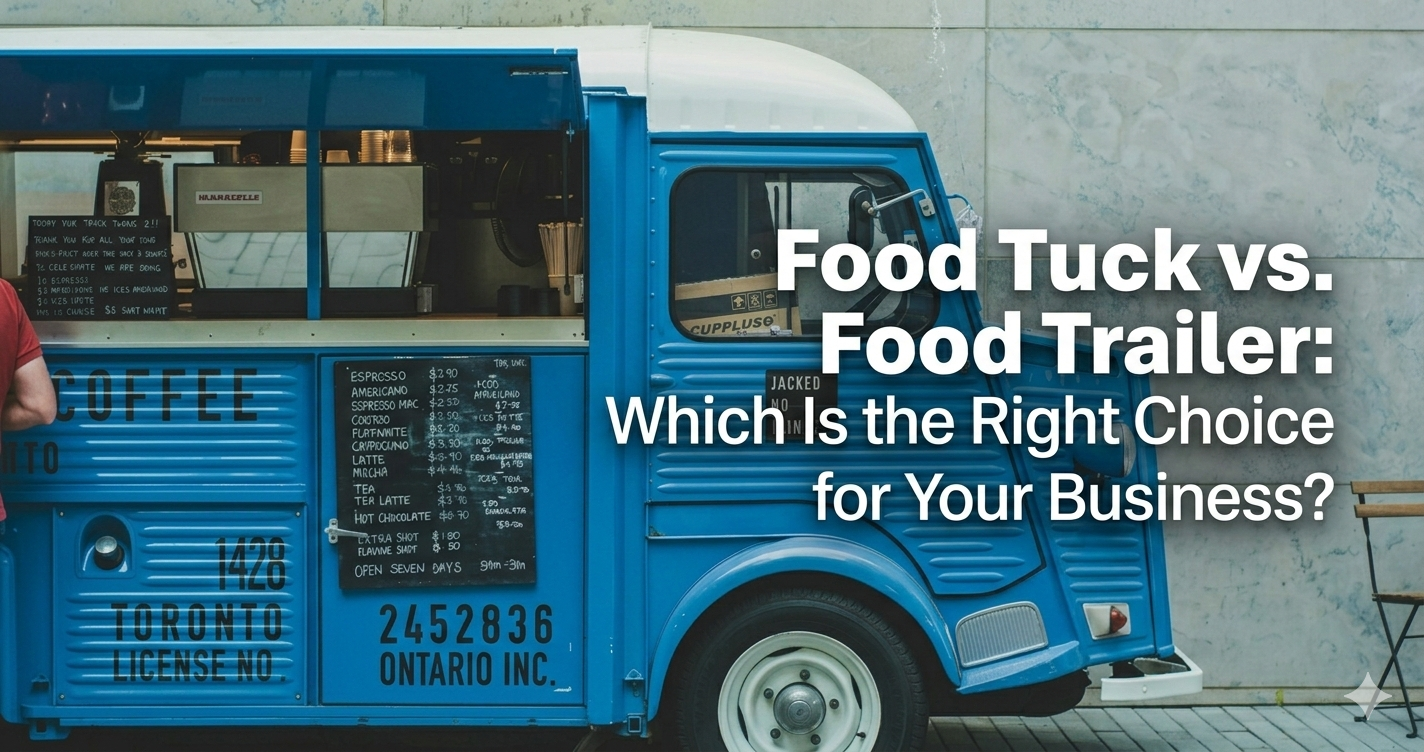
A food truck gives you maximum mobility — you can move daily, follow events, and operate in high-traffic street locations across the DMV. A concession trailer gives you more kitchen space at a lower entry cost, with the tradeoff of needing a tow vehicle and being less agile in urban settings.
For Virginia operators who plan to work street vending in DC, Arlington, or Fairfax, a food truck typically makes more sense. For operators focused on Northern Virginia festivals, private events, or Prince William County markets, a concession trailer is often the smarter and more cost-effective choice.
**Step Van Conversions**
Step vans — the FedEx and UPS-style delivery vehicles — are one of the most popular starting points for food truck entrepreneurs in Virginia. They offer a solid, road-proven chassis with a box body that converts well into a commercial kitchen. ESC inspects every customer-supplied step van before agreeing to convert it and builds the complete kitchen system inside.
**Size Matters More Than Most People Realize**
Small kitchen (10–11 ft): Coffee trucks, dessert concepts, shaved ice, specialty beverage operations
Medium kitchen (14–16 ft): Smash burgers, tacos, sandwiches, most single-concept operations
Large kitchen (17–18 ft): Full-service menus, multi-item cooking lines, catering operations
XL kitchen (20–22 ft): High-volume catering, multi-station concepts, fleet anchor units
Getting the size wrong is expensive. Too small and you cannot execute your menu efficiently. Too large and your fuel, parking, and operating costs go up unnecessarily. We size every build around your specific equipment list — not a generic template.
---
Step 4: Get Your Build Right the First Time
This is the part that matters most — and the part most new operators underestimate.
A food truck is not just a vehicle with a kitchen inside it. It is a commercial food facility on wheels, subject to the same health, safety, and fire codes as any brick-and-mortar restaurant. The difference is that it gets inspected by the health department before it can operate — and it has to pass.
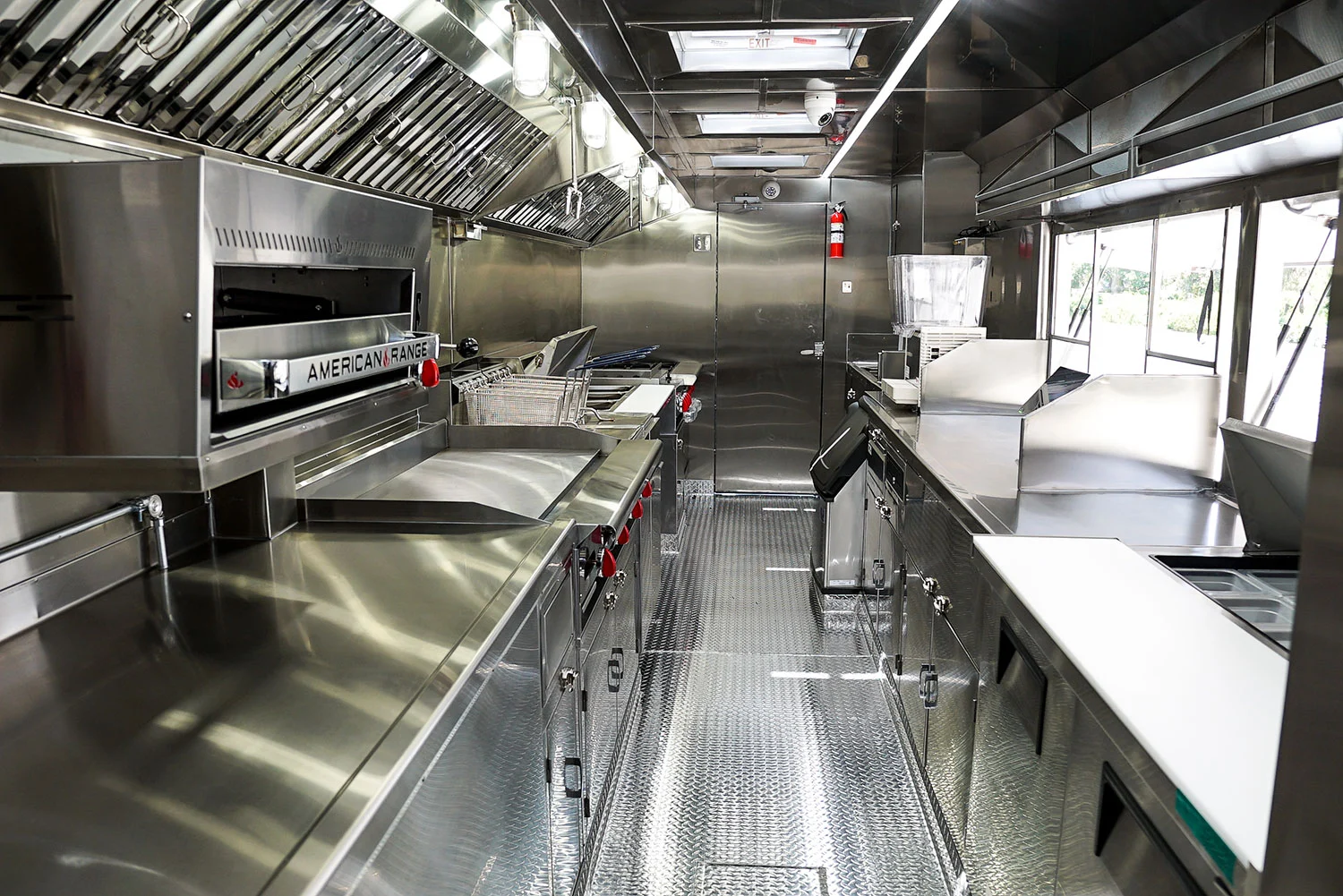
Here is what a properly built Virginia food truck must include to pass health and fire inspection:
**Three-Compartment Sink**
Required by Virginia health code for commercial warewashing. Wash, rinse, and sanitize compartments, with proper drainage to a grey water containment tank.
**Handwash Sink**
A dedicated handwash sink — separate from the three-compartment sink — is required in all Virginia food truck builds. It must be accessible without reaching over food prep areas.
**Fresh Water and Grey Water Systems**
Fresh water tank (food-grade, minimum capacity per your menu volume), grey water containment tank (must hold 15% more than your fresh water capacity), and all supply and drain lines to code.
**NSF-Certified Equipment**
Every piece of food contact equipment — refrigerators, prep surfaces, sinks, countertops — must be NSF-certified. This is not a suggestion. It is a health code requirement. Every ESC build uses NSF-certified commercial equipment throughout.
**NFPA 96 Fire Suppression System**
Required for any cooking operation with grease-producing equipment. The system must be installed by a certified technician and inspected before operation. ESC installs and certifies fire suppression systems on every applicable build.
**Commercial Exhaust Hood**
Properly sized to cover all cooking equipment, with a grease trap to prevent grease from entering the exhaust system. Undersized hoods are one of the most common reasons food trucks fail their first Virginia inspection.
**Insulation**
Closed-cell spray foam or rigid foam board in all wall, ceiling, and floor cavities. Required for temperature control, condensation prevention, and energy efficiency — especially important for Virginia's hot summers and cold winters.
When you build with Elite Steel Concepts, every single one of these is included as standard. You do not have to chase a checklist. We have built 350+ trucks and trailers that have passed health and fire inspection — 100% of the time.
---
Step 5: Plan Your Launch Location Strategy
Where you operate is as important as what you cook. Virginia and the DMV region have some of the highest-density food truck markets in the country — which means strong demand and strong competition in the best spots.
**Street Vending in DC and Northern Virginia**
Washington DC has a managed vending program for public spaces. Northern Virginia cities and counties each have their own sidewalk vending and parking lot permission rules. Research the specific regulations for every jurisdiction you plan to operate in before launch.
**Food Truck Events and Festivals**
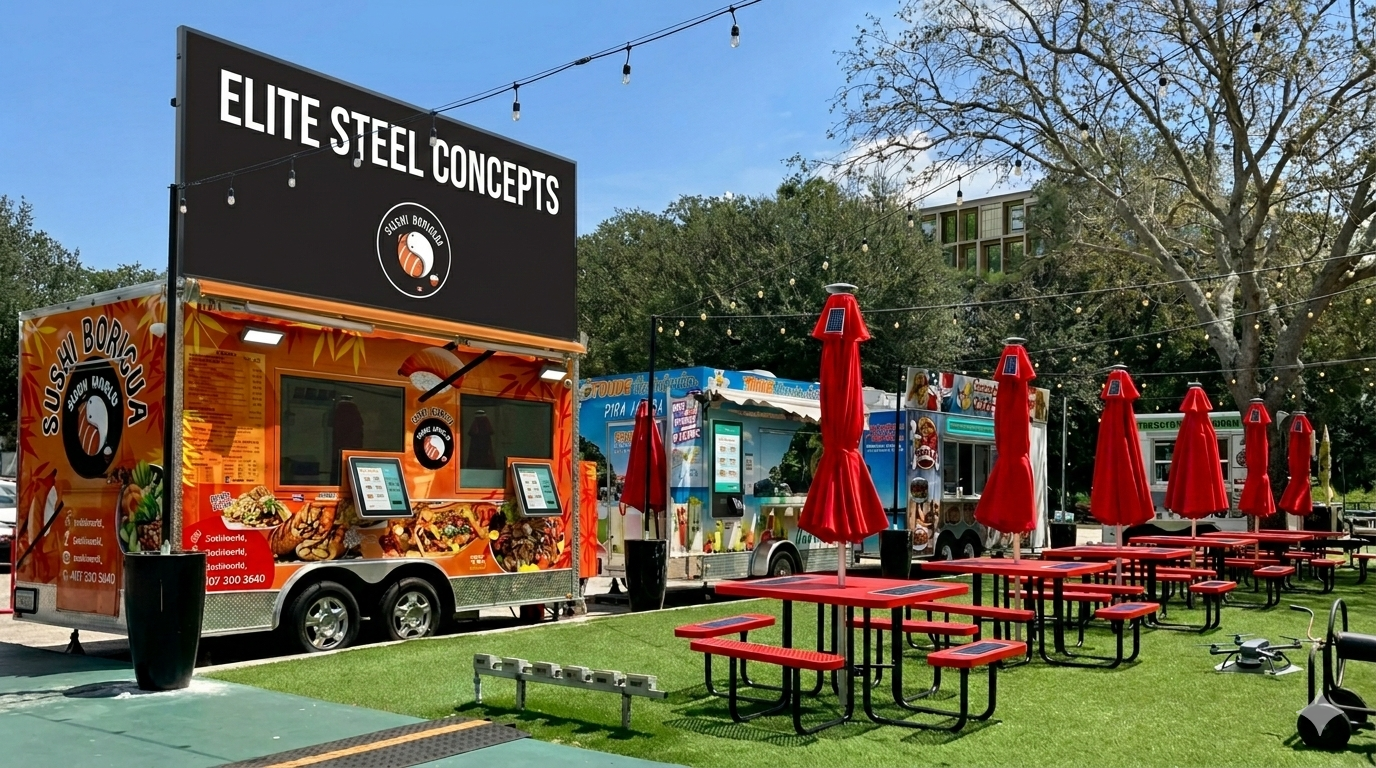
The DMV food truck festival circuit is one of the strongest in the mid-Atlantic. Events in Fairfax, Arlington, Prince William County, and DC draw thousands of attendees and generate some of the highest single-day revenue for mobile operators. Build relationships with event organizers early — the best spots book out months in advance.
**Private Events and Corporate Catering**
Corporate lunches, weddings, and private events are the highest-revenue opportunity in the Virginia food truck market. A single corporate catering booking can generate more revenue than a full week of street vending. A professionally built truck with a clean, polished exterior is essential for this market.
**Commissary Location**
Your commissary agreement locks you into a geographic operating range in most Virginia jurisdictions. Choose a commissary that is centrally located relative to your primary operating areas to minimize daily travel time and cost.
---
Why Virginia Food Truck Entrepreneurs Choose Elite Steel Concepts
We are not a national builder that ships you a truck from 2,000 miles away and hopes it passes your local inspection. We are your neighbors — based at 11200 Bertalice Ct, Manassas, VA 20110, right in the heart of Prince William County.
That means you can visit our shop while your truck is being built. You can see your build in progress, meet the team fabricating it, and ask questions face to face. No national builder can offer that.
It also means we know the Virginia and DMV market inside and out. We have built trucks for operators serving DC street vending circuits, Northern Virginia festival routes, Maryland catering markets, and every jurisdiction in between. We know what Virginia health inspectors look for. We know what Northern Virginia event organizers expect. And we build every truck to meet that standard from day one.
**14+ years** of custom food truck fabrication experience
**350+ builds** completed across 48 states
**100% health code pass rate** — every single truck
**8–12 week build timeline** — from signed agreement to delivery
**Nationwide delivery** available — we serve all 48 contiguous states
**Full repair and installation services** — fire suppression, hoods, electrical, plumbing, and more
---
Frequently Asked Questions About Starting a Food Truck in Virginia
How much does it cost to start a food truck business in Virginia?
Step van conversions and shell builds start around 30,000–40,000. Full custom food truck builds vary based on size, equipment, and specification. Concession trailers typically offer more kitchen space at a lower entry point. Contact Elite Steel Concepts at (571) 651-0337 for a free personalized quote based on your specific concept.
Do I need a commissary kitchen for my food truck in Virginia?
Yes. Virginia health departments require most food truck operators to operate out of a licensed commissary kitchen for food prep, equipment cleaning, and supply storage. You need a signed commissary agreement as part of your health permit application.
How long does it take to build a custom food truck in Virginia?
A typical ground-up custom food truck build at Elite Steel Concepts takes 8–12 weeks depending on equipment lead times and build complexity. Call (571) 651-0337 for current scheduling availability.
Will my food truck pass Virginia health inspection?
Every truck built by Elite Steel Concepts is designed to pass Virginia health and fire inspection from day one. Our health code pass rate is 100% across 350+ builds. We provide blueprints and documentation for your inspection.
Can I visit the Elite Steel Concepts shop while my truck is being built?
Absolutely. We are based at 11200 Bertalice Ct, Manassas, VA 20110. Clients are welcome to visit the shop and see their build in progress. This is one of the key advantages of building with a local Virginia fabricator versus a national builder.
Does Elite Steel Concepts serve Washington DC and Maryland?
Yes. We are the go-to custom food truck builder for the entire DMV region — Washington DC, Northern Virginia, and Maryland. We also deliver to all 48 contiguous states.
---
Ready to Launch Your Virginia Food Truck Business?
You have the concept. You have the vision. Now build it the right way — with a team that knows Virginia's market, knows the code requirements, and has 350+ builds to prove it.
**Elite Steel Concepts — Custom Food Truck and Concession Trailer Fabrication**
📞 **(571) 651-0337**
🌐
esteelconcepts.com/quote
📍 **11200 Bertalice Ct, Manassas, VA 20110**
Call us today or request your free quote online. Your build starts with a conversation.