Introduction
In 14 years and 350+ food truck builds, every single ESC-built truck has passed its health department inspection on the first attempt. That is not luck. It is because we design and build every truck with the inspector's checklist in mind from day one. As an experienced food truck builder, we understand exactly what health departments expect from food trailers and trucks, custom mobile kitchens, and commercial food service vehicles.
Whether you plan to
buy a food truck new, invest in food trucks and trailers for sale, or work with professional food truck builders, understanding the health inspection process is essential. This guide covers the complete food truck health inspection checklist and explains how to prepare your mobile kitchen for a successful first inspection.
Why Food Trucks Fail Health Inspections (The 7 Most Common Reasons)
Many entrepreneurs spend months developing a food truck business plan, selecting equipment, and designing menus, only to face delays during inspection. The most common reasons food trucks fail include:
1. Improper Handwashing Stations
Inspectors require a dedicated handwashing sink that is easily accessible at all times. Missing soap dispensers, paper towels, or hot water can result in immediate violations.
2. Incorrect Sink Configuration
Most jurisdictions require a three-compartment sink along with a separate handwash sink. Failure to meet these standards often leads to inspection failures.
3. Poor Temperature Control
Refrigerators, freezers, and hot-holding units must maintain proper temperatures. Unsafe food storage is one of the leading causes of failed inspections.
4. Non-Compliant Surfaces
Wood, unfinished materials, and porous surfaces are generally prohibited in commercial food preparation areas.
5. Plumbing Issues
Incorrect fresh water or grey water tank sizing can create compliance problems.
6. Electrical Safety Violations
Improper wiring, unlabeled panels, and missing GFCI outlets are common inspection concerns.
7. Missing Documentation
Many operators focus on equipment but forget required permits and paperwork. Having the proper food truck permits and licenses is just as important as having the right equipment.
The NSF Requirement — What Every Surface, Sink, and Equipment Item Must Be
Health inspectors carefully evaluate whether food-contact surfaces meet sanitation standards. NSF-certified equipment is designed specifically for commercial food service operations.
When building custom food trailers or Customized Food Trucks, every major piece of equipment should meet applicable food-service standards. This includes:
Refrigerators and freezers
Prep tables
Steam tables
Sinks
Food storage containers
Point three
Ice machines
Cooking equipment
At ESC, we help clients select equipment that satisfies inspection requirements before installation begins. This proactive approach helps eliminate costly modifications later.
Whether you're purchasing a new food truck, reviewing food truck trailers for sale, or exploring food service trucks for sale, verifying NSF compliance should always be a priority.
Plumbing Requirements — Fresh Water, Grey Water, Three-Compartment Sink, Handwash
Plumbing systems are among the most heavily inspected components of any food trailer or food truck.
Fresh Water Tank
Your truck must provide sufficient potable water capacity to support daily operations. Tank sizing requirements vary by jurisdiction but must meet local regulations.
Grey Water Tank
Most health departments require grey water tanks that exceed fresh water capacity by a specified percentage. This prevents overflow and sanitation risks.
Three-Compartment Sink
The three-compartment sink supports proper wash, rinse, and sanitize procedures. Inspectors verify sink dimensions and functionality during inspection.
Handwash
Professional food truck manufacturers near me searches often lead operators to builders who understand local health requirements. Working with experienced food truck manufacturers near me can significantly reduce compliance issues.ing Sink
A dedicated handwashing sink must remain accessible and separate from food preparation activities.
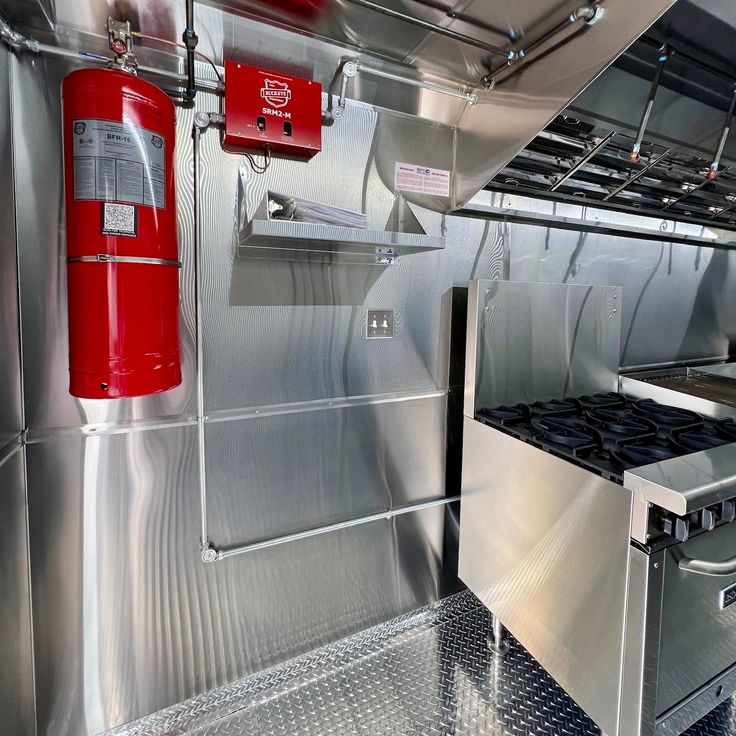
Ventilation and Fire Suppression — What Inspectors Check and How We Build to Those Standards
Ventilation systems play a critical role in food truck safety and compliance.
Inspectors typically evaluate:
Commercial hood systems
Fire suppression systems
Grease filtration
Exhaust airflow
Equipment placement
Clearance requirements
Cooking operations involving fryers, grills, or high-temperature appliances require properly designed ventilation systems.
As one of the industry's trusted food truck builders, ESC designs every kitchen layout to maximize safety while meeting code requirements. Our engineering process ensures ventilation systems align with inspection standards before construction begins.
Whether you are considering a food truck for sale new or planning a fully customized build, ventilation compliance should never be an afterthought.
Electrical Requirements — GFCI, Panel Labelling, Safe Wiring
Electrical compliance affects both safety and inspection success.
Health inspectors often review:
GFCI Protection
Ground Fault Circuit Interrupter outlets are required in locations exposed to water.
Electrical Panel Labelling
Every circuit should be clearly identified and documented.
Safe Wiring Practices
Inspectors verify that wiring is properly protected and professionally installed.
Generator Integration
Many operators depend on a food truck generator for daily operations. Proper generator installation and load calculations are essential for compliance.
A quality food truck design incorporates electrical planning from the beginning rather than treating it as an afterthought.
Flooring and Surfaces — What Materials Pass and Which Fail
Flooring materials must be durable, smooth, non-absorbent, and easy to clean.
Materials That Typically Pass
Commercial vinyl flooring
Aluminum finishes
Point three
Stainless steel surfaces
Fiberglass reinforced panels
Materials That Commonly Fail
Raw wood
Carpet
Point three
Unsealed surfaces
Porous materials
The interior construction quality often separates premium food truck manufacturing companies from inexperienced builders. Proper flooring and wall systems contribute significantly to long-term inspection success.
When evaluating food trucks and trailers for sale, always inspect interior finishes carefully.
Temperature Control — Refrigeration, Steam Tables, and Safe Food Storage
Food safety depends heavily on maintaining proper temperatures.
Inspectors evaluate:
Refrigeration Systems
Cold storage units must consistently maintain safe temperatures.
Hot Holding Equipment
Steam tables and warming units must keep food at approved temperatures.
Food Storage Procedures
Food must be protected from contamination and organized appropriately.
Equipment Capacity
Your equipment must match your operational needs.
Choosing the right food truck equipment during the build process helps avoid future compliance issues. This is particularly important for operators serving high-volume menus such as tacos, burgers, breakfast items, or specialty concepts.
Whether you're planning a taco truck, coffee concept, concession operation, or mobile catering service, temperature control remains a top inspection priority.
How to Prepare for Your Inspection Day (The ESC Pre-Inspection Walkthrough)
Before inspection day, ESC recommends the following checklist:
Verify Documentation
Ensure all required food truck permits and licenses are approved and available.
Test Every System
Run plumbing, electrical, refrigeration, and cooking equipment.
Stock Required Supplies
Have soap, sanitizer, paper towels, thermometers, and cleaning supplies available.
Clean Thoroughly
Inspectors notice cleanliness immediately.
Conduct a Mock Inspection
Walk through the truck as if you were the inspector.
Train Staff
Everyone should understand food safety procedures and equipment operation.
This preparation process is one reason ESC maintains a 100% first-time pass rate across more than 350 completed projects.
FAQ — Health Inspection Questions from ESC Clients
How long does a food truck health inspection take?
Most inspections take between one and three hours depending on the complexity of the operation.
Can I buy a used truck and still pass inspection?
Yes, but older units often require upgrades. Many entrepreneurs eventually decide to buy a food truck or buy a food truck new to simplify compliance.
Are food trailers inspected differently than food trucks?
The core requirements are similar, although local regulations may vary.
Do all food trucks need fire suppression systems?
Not all trucks require them, but trucks with commercial cooking equipment typically do.
Should I work with a professional builder?
Absolutely. Experienced custom food truck builders, food truck manufacturing companies, and reputable food truck builders near me understand health department requirements and can help avoid costly mistakes.
Conclusion
Passing your first health inspection is not about luck. It is about proper planning, professional construction, compliant equipment selection, and attention to detail. From plumbing and ventilation to electrical systems and food storage, every component of a mobile kitchen contributes to inspection success.
At ESC, every build is designed with inspection readiness in mind. Whether you're looking for food trailers, food trucks and trailers, food trailer truck for sale, or a completely customized mobile kitchen, compliance remains our top priority.
Every ESC-built truck is inspection-ready before it leaves our shop. 100% pass rate, 350+ builds, documentation provided. Call (571) 651-0337 to build yours.