Introduction
Choosing the right electrical system is an important part of planning a reliable mobile kitchen. Whether you are building a new food truck, upgrading a food trailer, or planning a custom mobile kitchen, your power setup needs to support your equipment safely and consistently.
Two common options are a food truck generator and shore power. Each system has different advantages depending on where you operate, what equipment you use, and how much electrical power your business requires.
Understanding the difference between food truck generator vs shore power can help you make a practical decision before finalizing your food truck design.
What Is Shore Power for a Food Truck?
Shore power allows a food truck or trailer to connect to an external electrical source at an approved location. Instead of producing electricity onboard, your mobile kitchen receives power from a compatible electrical connection.
Shore power can work well at venues that provide electrical hookups, including some festivals, private events, commercial locations, and designated operating areas.
The main benefit is that you do not need to operate a generator while connected to an appropriate power source. This can reduce generator noise and eliminate the need to carry fuel specifically for onboard electricity.
However, shore power depends on availability. If an event location does not provide a suitable connection, your food truck may need another power source.
What Is a Food Truck Generator?
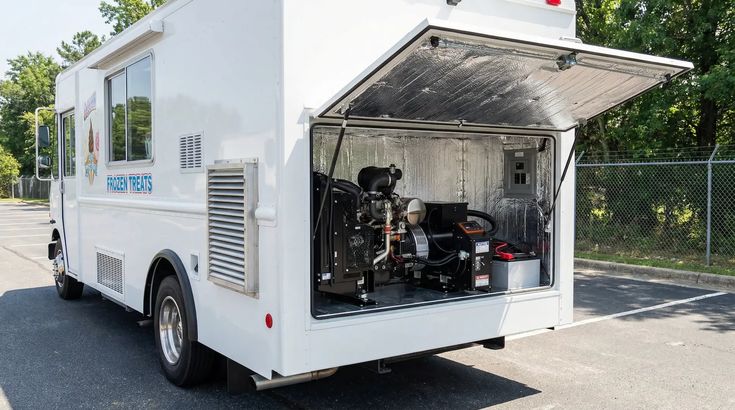
A food truck generator produces electricity onboard, allowing your mobile kitchen to operate without depending on an external electrical connection.
Generators can be particularly useful for mobile businesses that regularly change locations or operate in areas where shore power is unavailable.
A properly planned generator can provide power for important food truck equipment, such as refrigeration, lighting, ventilation systems, cooking appliances, and other electrical components. The required generator capacity depends on the total electrical load of your equipment.
Before choosing a generator, your builder should calculate the expected electrical demand rather than selecting a unit based only on size or price.
Food Truck Generator vs Shore Power: Key Differences
The biggest difference is where your electricity comes from.
A generator creates power onboard, while shore power supplies electricity from an external source. Your choice should therefore be based on your operating environment and electrical requirements.
Mobility
A generator provides greater independence because you can operate your mobile kitchen in locations without electrical hookups.
Shore power is more dependent on the venue. If reliable electrical service is available at your regular locations, however, it can be a convenient option.
Noise
Generators can produce operational noise, although generator technology and installation methods can affect the overall sound level.
Shore power can provide a quieter operating environment because electricity comes from an external connection rather than an onboard generator.
This may be important when operating near offices, residential areas, schools, weddings, or other events where noise needs to be considered.
Fuel and Operating Requirements
A generator requires an appropriate fuel source and regular maintenance. Depending on the generator type and usage, operators may need to monitor fuel levels, servicing, ventilation, and other operating requirements.
Shore power does not require onboard generator fuel, but you need access to a compatible electrical connection.
Reliability
A generator gives you an independent source of electricity when properly sized and maintained.
Shore power can be highly practical when a reliable electrical connection is guaranteed. However, the available amperage and connection type must match your mobile kitchen's requirements.
How Much Power Does Your Food Truck Need?
Your electrical requirements depend heavily on your menu and equipment.
For example, a mobile kitchen with refrigeration, lighting, ventilation, electric cooking equipment, water systems, and other appliances may have significantly different power requirements from a simple beverage-focused operation.
This is why electrical planning should happen during the food truck design stage rather than after construction is complete.
Your builder can review the equipment list and calculate the expected electrical load. This helps determine whether a generator, shore power, or a combination of both makes sense for your operation.
Can You Use Both Generator and Shore Power?
In some builds, using both systems can provide additional flexibility.
A mobile kitchen may be designed to connect to shore power when an appropriate hookup is available while also having an onboard generator for locations where external electricity is not available.
The exact configuration depends on the vehicle, electrical system, equipment, local requirements, and intended use.
A professional **food truck builder** can help plan the electrical infrastructure around your actual equipment list and operating locations.
Which Option Works Better for a Food Trailer?
A food trailer can use either generator power or shore power depending on its design and operating environment.
For example, a trailer that primarily operates at permanent venues with electrical hookups may benefit from a shore-power setup. A trailer that travels between festivals, private events, parking locations, and other mobile sites may need greater electrical independence.
When planning
custom food trailers, consider where the trailer will operate most often before selecting the electrical system.
What About Custom Food Trucks?
Custom builds offer an opportunity to plan electrical requirements around the menu and equipment from the beginning.
Custom food truck builders can integrate electrical components, equipment placement, generator space, shore-power connections, ventilation, and other systems into the overall layout.
This is especially important when purchasing or building a new mobile kitchen because changing major electrical components after construction can be more complicated.
If you are researching food truck manufacturing, discuss your expected equipment load and operating locations with the builder before construction begins.
Don't Forget Permits and Safety Requirements
Electrical installations are an important part of mobile food-service construction. Your setup may need to comply with applicable electrical, fire, health, and local requirements.
Food truck owners should also research food truck permits and licenses required for the locations where they plan to operate.
Requirements can vary by jurisdiction, so your builder and relevant local authorities should be consulted for project-specific requirements.
Generator or Shore Power What Should You Choose?
The right choice depends on your business rather than a one-size-fits-all answer.
A generator may be useful when:
You operate in many different locations.
External electrical hookups are not always available.
Your business needs independent power.
You regularly attend outdoor events and festivals.
Shore power may be useful when:
Your regular locations provide suitable electrical hookups.
You want to avoid onboard generator operation when possible.
Your operating environment benefits from lower equipment noise.
Reliable external electricity is consistently available.
For some businesses, a combination of both systems may provide the flexibility needed for different operating conditions.
Plan Your Power System Before Building
Electrical planning should be part of the initial mobile kitchen design. Start with your menu, create a complete equipment list, determine the electrical requirements, and then discuss the appropriate power configuration with your builder.
Whether you are looking for a food truck builder, planning custom food trailers, or comparing options for a new mobile kitchen, choosing the power system early can help prevent costly changes later.
A properly planned electrical system can support your equipment, improve operational flexibility, and help your food truck or trailer perform reliably in different locations.
If you're planning a new custom mobile kitchen, Elite Steel Concepts can help you plan the equipment layout and electrical requirements around your intended operation.