Introduction
A well-designed ventilation system is one of the most important parts of a safe and efficient mobile kitchen. Whether you are planning a new food trailer, upgrading an existing unit, or working with a builder on Customized Food Trucks, proper ventilation helps control heat, smoke, grease, odors, and airborne contaminants inside the kitchen.
For anyone planning to
buy a food truck new, ventilation should be considered during the design stage rather than treated as an afterthought. The right system can improve working conditions, protect kitchen equipment, and help your mobile kitchen meet applicable health and safety requirements.
Why Is Food Truck Ventilation Important?
Cooking equipment produces heat, steam, smoke, grease, and other airborne particles. Without adequate ventilation, these byproducts can quickly build up inside a compact mobile kitchen.
A properly designed food truck ventilation system can help:
Remove cooking smoke and grease
Reduce excessive heat
Improve indoor air quality
Protect walls, ceilings, and equipment from grease buildup
Improve comfort for kitchen staff
Support fire and safety requirements
Create a more efficient cooking environment
Ventilation becomes especially important when a truck uses high-heat cooking equipment such as grills, fryers, ranges, or other appliances that produce significant heat and grease.
Key Components of Food Truck Ventilation
A commercial mobile kitchen ventilation system usually includes several components that work together. The exact setup depends on the cooking equipment, kitchen layout, local requirements, and type of food being prepared.
1. Commercial Exhaust Hood
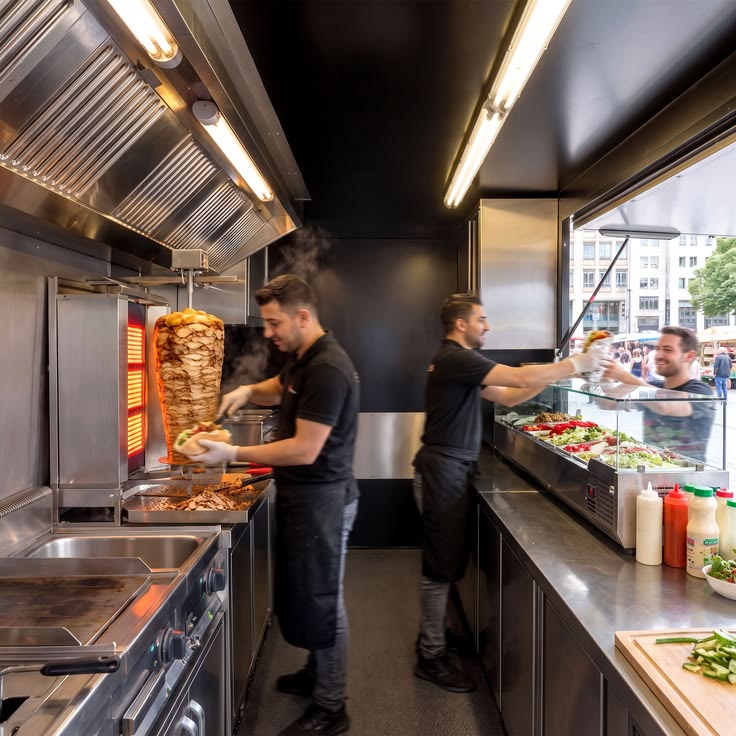
The exhaust hood is one of the main components of a ventilation system. It is positioned above cooking equipment to capture smoke, grease, steam, and heat before they spread throughout the kitchen.
The size and configuration of the hood should correspond to the equipment underneath it. A poorly sized hood may not capture cooking byproducts effectively.
When planning your **food truck design, make sure the hood location is considered alongside the placement of grills, fryers, ovens, and other cooking appliances.
2. Exhaust Fan
An exhaust fan moves contaminated air from the kitchen to the outside. The fan needs to work with the hood and duct system to provide effective airflow.
The required capacity can depend on factors such as:
* Type of cooking equipment
* Hood dimensions
* Kitchen layout
* Duct configuration
* Local building and fire requirements
Your food truck builder can help determine how the ventilation system should integrate with the rest of the mobile kitchen.
3. Make-Up Air
When air is exhausted from a mobile kitchen, replacement air is needed. This is commonly referred to as make-up air.
Without adequate replacement air, excessive negative pressure can affect ventilation performance and make doors difficult to operate. It can also interfere with combustion appliances in certain kitchen configurations.
Make-up air should therefore be considered during the overall ventilation design instead of being added later.
4. Grease Filters
Grease-producing equipment can send grease particles into the exhaust system. Grease filters help capture these particles before they enter the ductwork.
Filters need regular cleaning and maintenance. Keeping them clean can help maintain airflow and reduce grease accumulation.
Ventilation and Food Truck Equipment Layout
Ventilation cannot be designed separately from the rest of the kitchen. The placement of food truck equipment has a direct impact on how the ventilation system should be configured.
For example, a kitchen with a fryer, grill, range, and oven may require a different ventilation approach than a truck focused on cold preparation or beverage service.
Before finalizing a mobile kitchen, consider:
Cooking equipment locations
Hood coverage
Worker movement
Available wall and ceiling space
Electrical requirements
Fuel or gas connections
Fresh-air requirements
Exhaust routing
A professional food truck design should balance these factors so the kitchen remains practical and safe.
Ventilation for Custom Food Trailers
Ventilation requirements can vary significantly between different mobile kitchens. A small concession setup may have different needs from a full-service cooking operation.
This is why
custom food trailers are often designed around the specific menu and equipment requirements of the operator.
For example, a menu centered on fried foods may require substantial grease-exhaust capacity, while a coffee-focused setup may have different ventilation requirements.
If you are comparing food truck manufacturers or food truck builders, ask how they approach ventilation during the design and fabrication process.
Ventilation, Fire Safety, and Permits
Ventilation is also connected to fire and health requirements. Depending on your location and kitchen setup, your mobile food business may need to satisfy requirements involving exhaust systems, fire suppression, cooking equipment, electrical systems, and other safety features.
Before purchasing or building a unit, research your local food truck permits and licenses requirements.
Requirements can vary by city, county, and state, so it is important to confirm current regulations with the appropriate local authorities.
A builder can help with the physical design, but the operator should still verify which permits, inspections, and approvals are required for the intended operating location.
Consider Ventilation Before Buying a Food Truck
If you are searching for a **food truck for sale new**, do not evaluate the truck only by its appearance, size, or equipment package.
Ask questions about:
Exhaust hood specifications
Exhaust fan capacity
Grease filters
Make-up air
Fire suppression
Ductwork
Cooking equipment compatibility
Electrical and fuel requirements
Maintenance access
If you are planning to buy a food truck new, reviewing these details before purchase can help you avoid expensive modifications later.
Ventilation and the Food Truck Generator
Power requirements should also be considered during the planning stage. Exhaust fans, make-up air systems, refrigeration, lighting, and other equipment may contribute to the electrical load.
If your mobile kitchen uses a food truck generator, make sure the overall electrical system is properly planned for the equipment being installed.
A complete equipment and power assessment can help determine whether the truck's electrical system is suitable for the intended operation.
Maintenance Keeps Ventilation Working Properly
Even a well-designed ventilation system requires regular maintenance.
Operators should establish a routine for checking and cleaning:
Grease filters
Exhaust hood surfaces
Fans
Accessible duct components
Surrounding cooking areas
The frequency and extent of professional cleaning can depend on the type and volume of cooking. Heavy grease-producing operations generally require more frequent attention.
Regular maintenance can help preserve airflow, reduce grease accumulation, and keep the kitchen operating efficiently.
Choose Ventilation Based on Your Menu
Your menu should influence your mobile kitchen design from the beginning. A
food truck business plan should consider the equipment needed to prepare the planned menu and the ventilation requirements associated with that equipment.
For example, a burger-focused operation, a barbecue concept, and a beverage trailer may have very different cooking and ventilation needs.
Planning the menu, equipment, ventilation, power, plumbing, and workspace together creates a more practical mobile kitchen.
Final Thoughts
Proper food truck ventilation** is essential for creating a safe, comfortable, and functional mobile kitchen. From commercial exhaust hoods and grease filters to exhaust fans and make-up air, every component should work together with the cooking equipment and overall truck layout.
Whether you are building **Customized Food Trucks, purchasing a new unit, or upgrading an existing food trailer, ventilation should be part of the design discussion from the start.
Working with experienced food truck builders can help you develop a kitchen layout that accounts for cooking equipment, airflow, power requirements, maintenance access, and applicable local requirements.