Intoduction
Starting a successful food truck business takes more than a great menu and a strong brand. The equipment inside your truck determines whether you pass inspection, operate safely, and serve customers efficiently. A complete food truck equipment checklist helps owners avoid delays, failed inspections, and expensive upgrades later.
Whether you are planning to buy a food truck new, looking at food trucks and trailers for sale, or hiring professional food truck builders, choosing the right equipment is one of the most important decisions you will make.
In this guide, we’ll cover everything your mobile kitchen needs to pass inspection and run smoothly.
Why Equipment Selection Matters
Many first-time owners focus only on the truck exterior, menu, or branding. But health departments and fire inspectors care about what is inside. Proper food truck equipment ensures:
Safe food storage
Proper cooking temperatures
Fire safety compliance
Clean water and sanitation systems
Reliable electrical performance
Faster service during busy hours
If you’re searching where to buy a food truck, always ask whether the unit already includes certified equipment or if upgrades are needed.
Your cooking line depends on your menu, but most mobile kitchens need some combination of these essentials:
Grills and Flat Tops
Perfect for burgers, breakfast, sandwiches, and tacos. Many owners running food truck burgers concepts rely on flat tops for speed and versatility.
Fryers
Common for fries, wings, and fried snacks. Must be paired with a fire suppression system.
Ranges and Burners
Useful for sauces, soups, rice, and sautéed foods.
Ovens
Great for pizza, baked items, and specialty concepts.
Steam Tables / Warmers
Keep prepared food at safe holding temperatures.
When working with experienced food truck manufacturers near me, they can recommend layouts that maximize workflow.
2. Ventilation & Fire Suppression Requirements
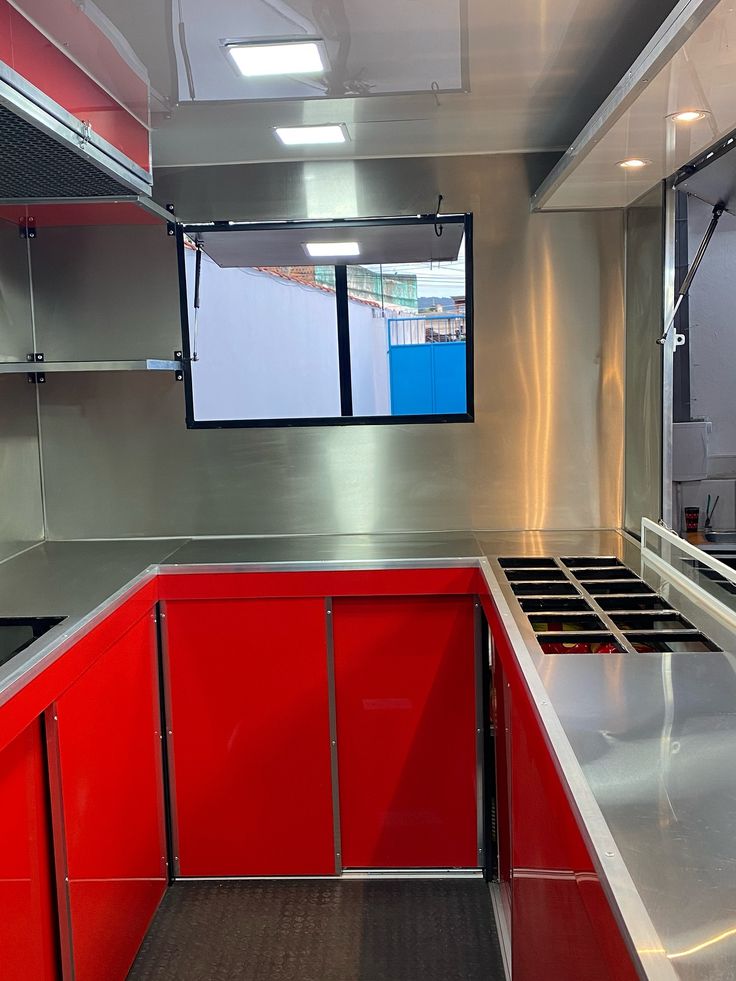
Every truck using grease-producing equipment usually needs a commercial hood system.
Hood Vent System
Removes smoke, heat, grease vapors, and odors.
Exhaust Fan
Keeps air moving and reduces kitchen heat.
Fire Suppression System
Automatic systems installed above fryers, grills, and cooking stations. This is one of the most common inspection requirements.
Fire Extinguishers
Most trucks need Class K extinguishers plus standard fire extinguishers.
If you are using a custom food truck builders company, make sure suppression systems are installed professionally and certified.
3. Refrigeration Requirements
Cold storage is critical for passing health inspections. Foods must stay below required safe temperatures.
Reach-In Refrigerator
For meats, dairy, vegetables, sauces, and daily ingredients.
Freezer
Required for frozen products and long-term storage.
Prep Table Refrigerators
Great for tacos, sandwiches, salads, and toppings.
Thermometers
Internal and external thermometers are often mandatory.
Owners comparing food trailers and trucks often choose trailers when they need more refrigeration space.
4. Plumbing & Sink Requirements
Water systems are one of the biggest reasons trucks fail inspection. Most health departments require multiple sinks.
Three-Compartment Sink
Used for washing, rinsing, and sanitizing utensils.
Handwashing Sink
Separate sink with soap and paper towels.
Fresh Water Tank
Stores clean water.
Grey Water Tank
Collects wastewater. Usually must be larger than the fresh tank.
Water Heater
Provides hot water for cleaning and handwashing.
If you're purchasing a concession trailer, ask for tank sizes and plumbing specs before buying.
5. Electrical Requirements
Food trucks need reliable power for refrigeration, lights, POS systems, and cooking appliances.
Generator
A quality food truck generator powers your operation when shore power is unavailable.
Shore Power Connection
Allows plugging into approved external electricity sources.
Breaker Panel
Protects circuits and prevents overloads.
LED Lighting
Efficient lighting helps save power.
Backup Batteries / Inverters
Useful for lights, POS, and emergency systems.
If you plan to lease food truck units, ask whether the electrical system supports your menu equipment.
6. NSF Certification Explained
Many health departments prefer or require NSF-certified equipment.
NSF means equipment meets standards for:
Food safety
Easy cleaning
Durable commercial construction
Sanitary surfaces
Food safety
Easy cleaning
Durable commercial construction
Sanitary surfaces
Examples include sinks, prep tables, refrigerators, and storage units.
When working with a food truck builder, request NSF-certified equipment to avoid compliance issues later.
7. Storage & Prep Equipment
Efficient storage keeps service fast and organized.
Stainless Steel Prep Tables
Shelving Units
Dry Storage Cabinets
Ingredient Bins
Cutting Boards
Utensil Holders
For owners planning a food van business or compact food trailer, smart vertical storage can make a huge difference.
8. Service & Customer Equipment
Don’t forget front-of-house essentials:
POS system
Cash drawer
Receipt printer
Order pickup shelf
Order pickup shelf
Exterior serving window
Order pickup shelf
Condiment station
Great service equipment improves customer flow during busy food truck events and catering jobs.
9. Cleaning & Sanitation Supplies
Inspectors also look for sanitation readiness.
Checklist includes:
Sanitizer buckets
Gloves
Paper towels
Soap dispensers
Trash cans with lids
Mop bucket
10. Should You Buy Used or New Equipment?
A food truck for sale new often includes properly installed systems and warranties. Used equipment can save money, but always inspect:
Age of appliances
Refrigeration performance
Fire suppression status
Electrical load capacity
Water leaks or rust
Many buyers looking at used food service truck for sale listings later spend more on repairs.
What Equipment Is Required in a Food Truck?
Most trucks need:
Cooking appliances
Vent hood system
Fire suppression
Refrigerator/freezer
Hand sink
Three-compartment sink
Fresh and waste water tanks
Generator or power hookup
Storage shelving
Cleaning supplies
Local codes vary, so always check city and county regulations.
What Do You Need in a Food Truck Kitchen?
To run efficiently, you need:
Point one
Point two
Easy-to-clean work areas
Cold storage
Reliable power
Food-safe surfaces
Proper airflow
Certified commercial equipment
Smart kitchen layout
That’s why many owners hire professional food truck builders near me instead of trying DIY conversions.
Downloadable Checklist CTA
Before opening day, create a printed checklist for:
Equipment installed
Fire system certified
Plumbing tested
Refrigeration working
Generator serviced
Health permit ready
Final Thoughts
The right food truck equipment checklist can save you time, money, and failed inspections. Whether you need a New Food Truck, custom food trailers, or advice on purchasing a food truck, equipment planning should come first.
Need equipment installed or a truck built the right way? ESC does it all. Call (571) 651-0337 today.
FAQs
How much does food truck equipment cost?
Costs vary by concept, but full equipment packages often range from $20,000 to $80,000+.
Can I build my own truck?
Yes, but many owners prefer licensed food truck builders for code compliance.
Is a trailer better than a truck?
Some operators choose food trailers because they offer more kitchen space.
Do I need permits too?
Yes. Along with equipment, most businesses need food truck permits and licenses before opening.